

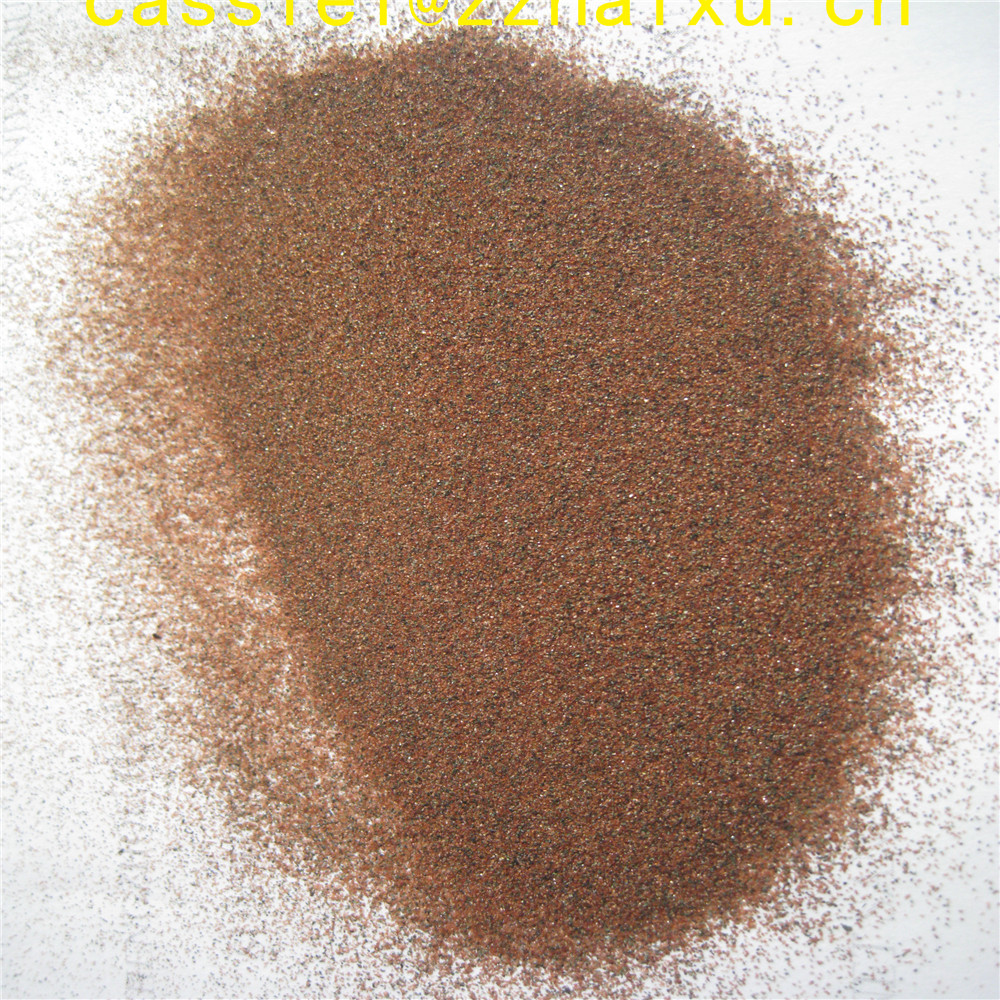
Garnet abrasive is made from natural garnet minerals, primarily almandine (iron-aluminum garnet), processed into sharp, angular grains.
<img src="data:;base64,” alt=”” aria-hidden=”true” />
1. Mineral Composition (Main)
- Dominant species: Almandine (Fe₃Al₂(SiO₄)₃) — the hardest, toughest, and most widely used for abrasives.
- Other varieties (less common):
- Pyrope (Mg₃Al₂(SiO₄)₃) — magnesium-aluminum garnet.
- Andradite, Grossular, Spessartine — rarely used for industrial abrasives.
- Purity: Commercial grades are 90–98% garnet, with trace impurities (quartz, ilmenite, clay) removed by washing & magnetic separation.
2. Typical Chemical Formula (Almandine)
3FeO · Al₂O₃ · 3SiO₂
Or: Fe₃Al₂(SiO₄)₃
3. Typical Chemical Composition (wt%)
| Compound | Percentage |
|---|---|
| SiO₂ (silica) | 34–40% |
| Al₂O₃ (alumina) | 17–21% |
| FeO + Fe₂O₃ (iron oxides) | 25–31% |
| MgO (magnesia) | 5–6% |
| CaO (lime) | 1–10% |
| MnO (manganese oxide) | 0–1% |
4. Key Physical Properties
- Hardness: 7.5–8 Mohs (harder than steel, quartz, feldspar)
- Density: 3.8–4.1 g/cm³ (heavy, fast-cutting, low dust)
- Color: Dark red / brownish-red
- Shape: Angular, sharp-edged grains (from crushing)
- Toughness: Moderately tough, reusable (6–12 cycles)
5. How It’s Made
- Mining natural garnet rock
- Crushing & screening to size
- Washing (remove dust/clay)
- Magnetic separation (remove iron impurities)
- Drying & final grading
6. Common Uses
- Waterjet cutting (80–120 mesh)
- Blasting / surface prep (30–60 mesh): rust/coating removal
- Abrasive powders for polishing & lapping