

The most commonly used waterjet cutting abrasives fall into a few main types, each with different hardness, cutting speed, cost, and application suitability. Here are the main ones:
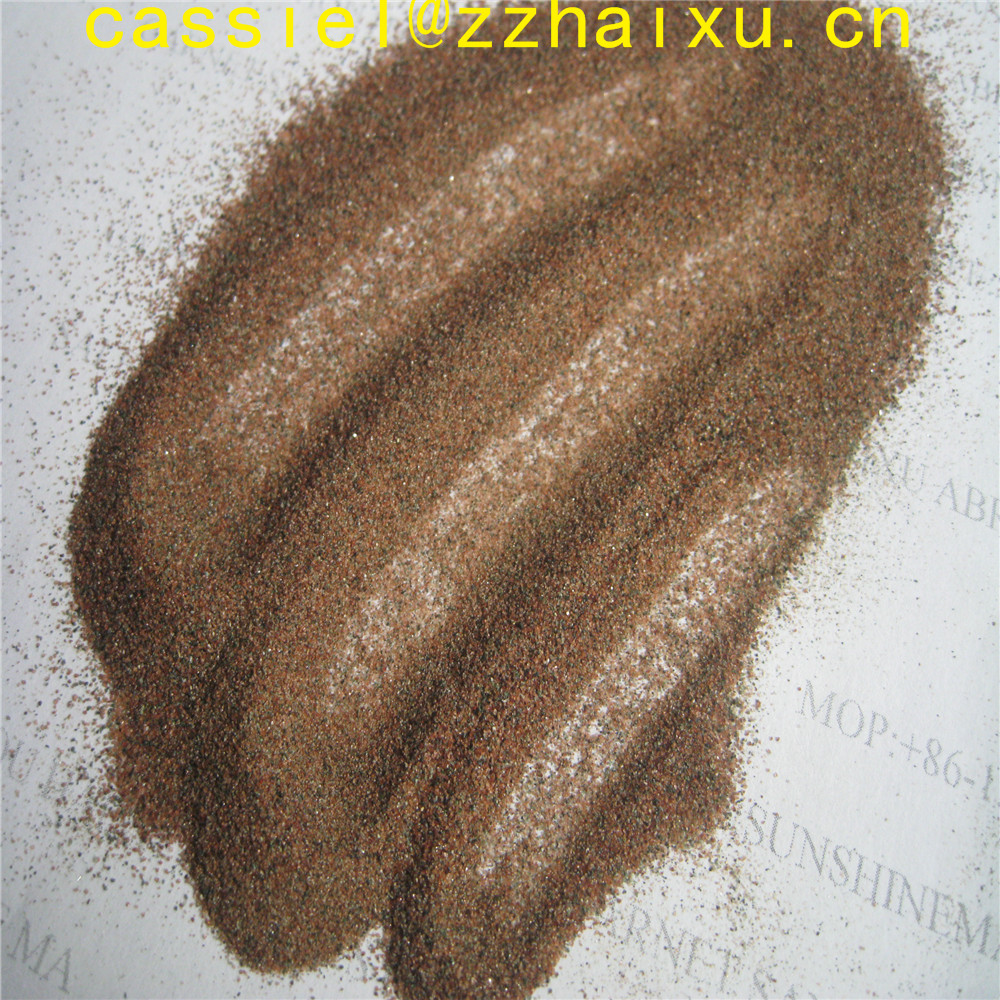
1. Garnet (Most Widely Used)
- Type: Almandite garnet (natural mineral abrasive)
- Garnet sand Hardness: 7.0–8.0 Mohs
- Mesh commonly used: 30/60 80#, 120#
- Advantages:
- Good balance of cutting speed & cost
- Low dust, non-toxic, safe for operators
- Does not damage pump components
- Applications:
- Metal (steel, stainless steel, aluminum)
- Stone, glass, composites, tile
- Status: Industry standard abrasive for almost all general waterjet cutting

2. Silicon Carbide (SiC)
- Hardness: 9.0–9.5 Mohs (much harder than garnet)
- Advantages:
- Cuts much faster than garnet
- Excellent for very hard materials
- Disadvantages:
- Higher cost
- Abrasive → wears nozzle and mixing tube faster
- Applications:
- Extremely hard materials: carbide, ceramics, boron carbide, sapphire
3. Aluminum Oxide (Al₂O₃ / Corundum)
- Hardness: 9.0 Mohs
- Advantages:
- High cutting efficiency
- Good for heavy-duty cutting
- Disadvantages:
- High wear on cutting head parts
- More expensive than garnet
- Thick steel, hard alloys, some refractory materialsApplications:
4. Sand (Quartz Sand / Olmstead Sand)
- Hardness: ~7 Mohs
- Advantages: Very low cost
- Disadvantages:
- Slow cutting
- High dust, friable (breaks easily)
- Severe wear on nozzles and pumps
- Use: Mostly obsolete in modern waterjets; only for very low-budget rough cutting
5. Specialty / Rare Abrasives
- Diamond powder: Ultra-hard, extremely expensive → only for micro-cutting / lab use
- Boron carbide (B₄C): Extremely hard but costly, not used as a general abrasive
- Steel shot / grit: Used in some abrasive blasting but rarely in pure waterjet cutting
Quick Comparison Summary
| Abrasive | Hardness | Cutting Speed | Cost | Wear on Nozzle | Main Use |
|---|---|---|---|---|---|
| Garnet | Medium | Standard | Low | Very low | General cutting |
| Silicon Carbide | Very high | Fastest | High | High | Hard ceramics |
| Aluminum Oxide | High | Fast | Medium | High | Heavy industry |
| Quartz Sand | Low | Slow | Very low | Severe | Obsolete |
Conclusion
For almost all commercial and industrial waterjet cutting, garnet (80# or 120#) is the default choice.
Silicon carbide and aluminum oxide are only used when cutting exceptionally hard materials where speed or hardness is critical.